
Camel Yard

A procession of camels and wise men are making their way “east”. The caravan is in fact traveling north to south and not true east. Helen has written the words “East/Oos” on the boundary fence, creating a place where the sun and moon rise and the direction in which men turn to in prayer. The whole of the Owl House and Camel Yard is filled with many stories and themes, inspired by books and images.
Welcome to Helen’s Mecca. This symbolic journey is layered with meaning: the camels and wise men evoke pilgrimage and spiritual quest, while the deliberate misdirection of the caravan’s path challenges conventional notions of orientation and sacred geography. The inscription “East/Oos” on the boundary fence marks a liminal threshold—a place where celestial cycles and human devotion intersect.

Within this enchanted space, the Owl House and Camel Yard become a microcosm of Helen’s inner world, a sanctuary where myth, memory, and faith converge. The sculptures and inscriptions invite visitors to contemplate the interplay of light and shadow, direction and destination, earthly journey and transcendent aspiration. Helen’s Mecca is not just a physical site but a poetic realm where stories unfold in layers, each element resonating with cultural, religious, and personal symbolism. It is a testament to the power of imagination to transform space into a sacred landscape, inviting all who enter to embark on their own inward pilgrimage.


Here, the procession of camels and wise men transcends mere representation; it becomes a living metaphor for the human search for meaning and belonging. The north-to-south trajectory, contrary to the proclaimed eastward direction, suggests a deliberate subversion of traditional pilgrimage routes, inviting reflection on the fluidity of spiritual paths. The boundary fence, inscribed with “East/Oos,” acts as both a physical and symbolic marker, framing the Owl House and Camel Yard as a sacred compass point. This dual-language inscription bridges cultural divides, merging Afrikaans and English to evoke a universal orientation toward light, hope, and transcendence.


Every sculpture, every etched word, and every carefully placed object within this space contributes to a layered narrative that intertwines personal history with broader themes of faith, exile, and transformation. Helen’s Mecca thus becomes a sanctuary not only for her own spirit but for all who seek a place of contemplation and renewal. Visitors to the Owl House and Camel Yard are invited to step beyond the ordinary and enter a realm where time, direction, and story converge. It is a place where the sacred and the surreal coexist, where the journey outward mirrors an inward pilgrimage toward understanding and peace.
In this visionary sanctuary, Helen Martins crafted a timeless dialogue between the earthly and the divine, the seen and the unseen, inviting each visitor to find their own path within the mosaic of meaning she so lovingly assembled.


The Camel Yard of the Owl House:
Helen Martins’ Surreal Sculpture Garden in Nieu-Bethesda
A Living Allegory: Helen Martins turned her yard into a symbolic world of creation and change. For her, art was a way to connect the physical and the spiritual, the seen and the unseen. Visitors don’t just see sculptures — they step into a story about humanity’s search for meaning.


The Camel Yard
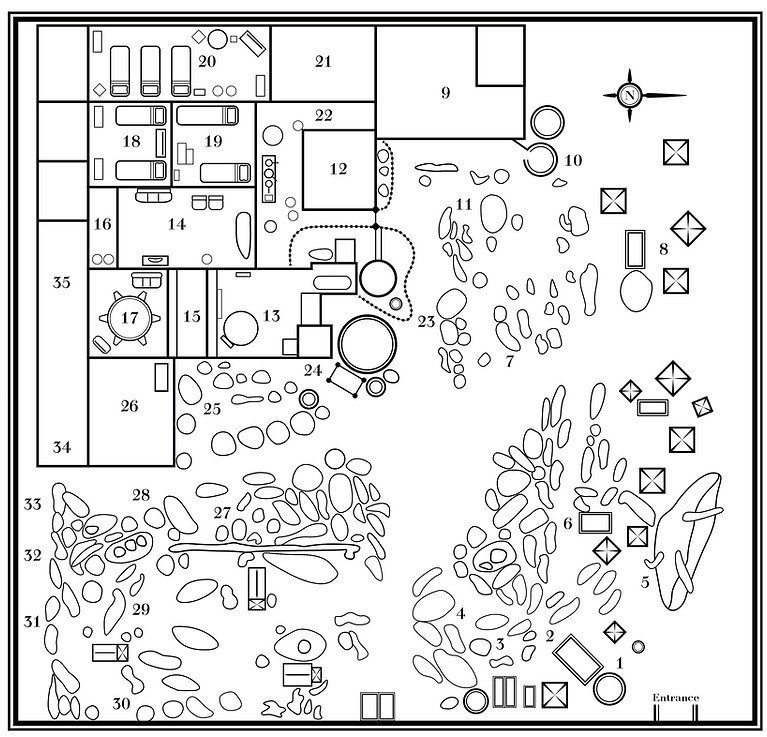
Part of the famous Owl House, the Camel Yard is one of South Africa’s most unique examples of outsider art. Between the 1940s and 1970s, Martins, with the help of local artisan Koos Malgas, built a garden with hundreds of sculptures in concrete, glass, and imagination. Camels, Wise Men, owls, sphinxes, and strange hybrid figures all face east, toward the rising sun. Together, they create a space where material and metaphor meet.
Symbolism and Meaning
The Camel Yard is like a symbolic universe. Every figure and material carries meaning. The camels and Wise Men moving east represent the soul’s journey toward enlightenment. Owls act as guardians of wisdom. Sphinxes and hybrids mark the boundary between worlds, showing transformation and mystery.
By using crushed glass, Martins made light itself part of her art, turning it into a symbol of revelation. Her human figures — pilgrims, prophets, seekers — represent humanity’s constant search for understanding.


The Procession of Camels and Wise Men
The yard’s name comes from the camels and Wise Men that dominate the space. All face east, toward the sunrise, symbolizing rebirth and enlightenment.
Camels:
With long necks and stylized forms, they suggest endurance, patience, and resilience — qualities needed for any spiritual journey.
Wise Men:
Drawn from Christian tradition but reimagined, they symbolize the pursuit of wisdom and courage to follow the light. Together, they form a sculptural pilgrimage. The crushed glass in their surfaces catches the Karoo sun, making them glow like vessels of light.

Owls: Guardians of Wisdom
Owls appear throughout the yard, perched on walls and rooftops. For Martins, they symbolized wisdom and mystery. Their glass eyes shine in sunlight and moonlight, making them seem alive. Across cultures, owls carry meanings of prophecy and transformation. Martins’ owls are protective and benevolent, reflecting her desire for clarity and understanding.

Mermaids:
Symbols of longing and duality, figures caught between two worlds.
Lions:
Represent courage and guardianship, grounding the garden’s dreamlike energy.
Sphinxes and Mythical Figures:
Sphinxes stand as guardians, blending Egyptian symbolism with Martins’ imagination. They invite reflection on life’s mysteries. Around them are mermaids, lions, and other hybrids:
Cosmic Themes
Many sculptures face east, showing Martins’ devotion to light and renewal. Figures with raised arms or upward gazes suggest a yearning for connection with the cosmos. The crushed glass makes them shimmer under sun and moon, giving them a celestial quality. The Camel Yard becomes a kind of observatory — a place where dawn symbolizes awakening and the sculptures seem like prayers reaching toward the universe.
Human Figures
Martins also created human forms — pilgrims, prophets, seekers — joining the procession toward enlightenment. Some are angular, showing struggle, while others are rounded, showing harmony. Together, they represent humanity’s journey from darkness to light, from isolation to insight.

